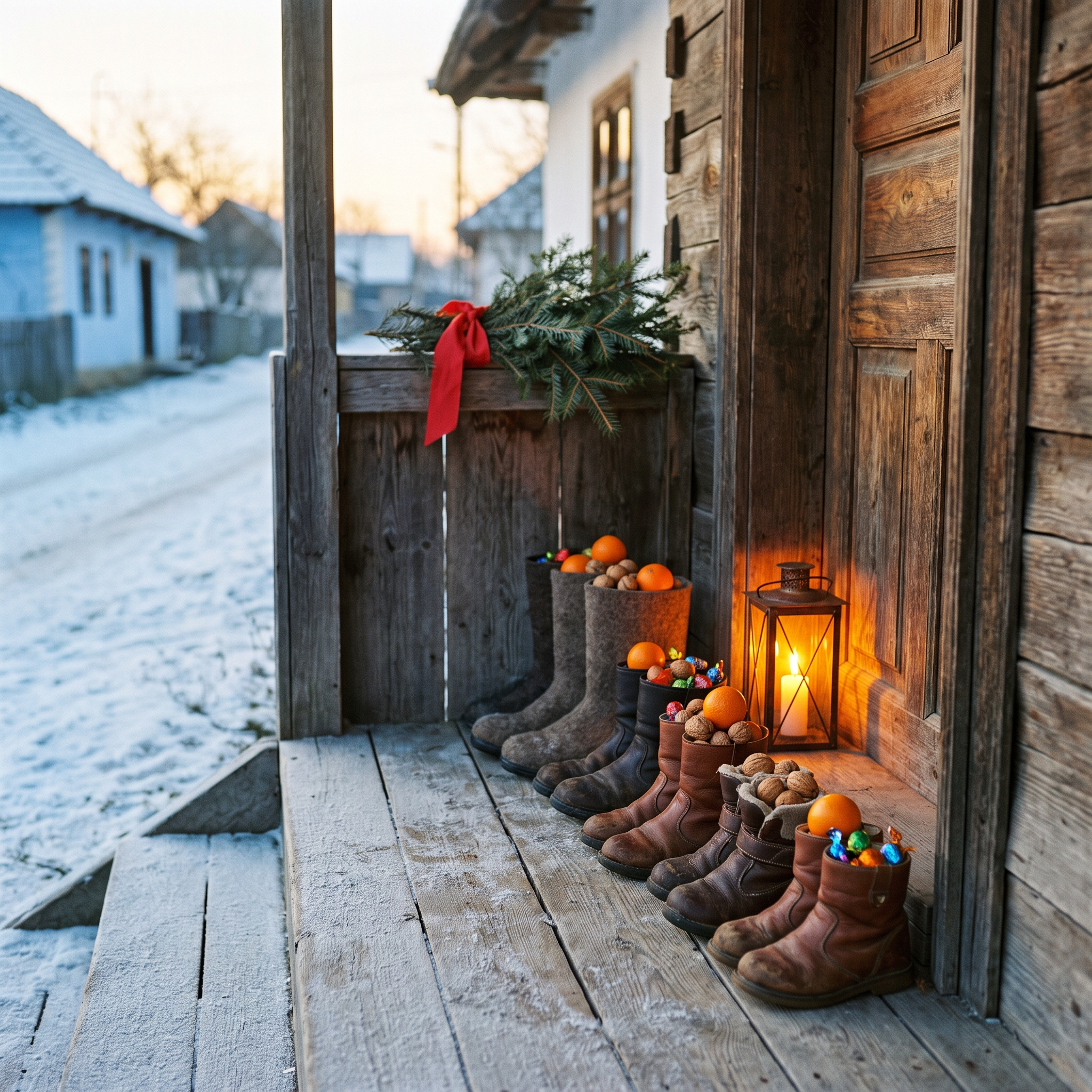
On December 6th, much of the world celebrates Saint Nicholas Day. In Moldova, though, the date that matters most is December 19th. The saint is the same — Sfântul Nicolae, beloved protector of children — but the calendar he’s celebrated by tells a quietly fascinating story of history, faith, and thirteen missing days.
Two Calendars, One Saint
For centuries, the Christian world used the Julian calendar. When the Gregorian calendar was introduced in 1582 to correct a drift in how the year was measured, Western churches gradually adopted it. Many Orthodox churches did not. Over time, the gap between the two systems grew to thirteen days.
In 1924, several Orthodox churches — including the Romanian Orthodox Church — adopted the Revised Julian calendar for fixed feast days, which lines up with the civil Gregorian calendar. Others, including the Russian Orthodox Church, kept the old, unrevised Julian calendar. The result: a feast fixed on December 6th “Old Style” lands on December 19th once translated into the modern, “New Style” calendar most of the world uses. Same date on the church calendar, two different days on the wall calendar.
A Shared Date Across Two Churches
Moldova’s Orthodox faithful belong mainly to two church structures. The Metropolis of Chișinău and All Moldova answers to the Moscow Patriarchate and, like the Russian Orthodox Church, keeps the old, unrevised calendar. The Metropolis of Bessarabia answers to the Romanian Patriarchate — yet even though Romania itself switched to the revised calendar back in 1924, believers of the Metropolis of Bessarabia chose to keep the old, unrevised calendar for their feast days too.
The practical effect is a quiet point of unity in a country whose churches don’t always agree on much else: whichever metropolis a Moldovan family belongs to, Sfântul Nicolae is marked on the same day — December 19th — while Romania itself celebrates on December 6th.
Celebrating Moș Nicolae in Moldova
The traditions feel familiar even with the later date. On the evening of December 18th, children clean their boots and set them by the door or on the windowsill. Overnight, Moș Nicolae — the folk name for the saint, in the same spirit as Moș Crăciun — is said to visit, filling good children’s boots with oranges, walnuts, sweets, and small gifts.
- Children who misbehaved might find a small twig (a nuielușă) tucked in with the treats — a gentle, good-humored nudge rather than a real punishment.
- December 19th doubles as a name day (onomastică) for everyone called Nicolae, Nicoleta, Nicu, or Nicușor, often celebrated with family gatherings and a table full of food.
- Folklore in Moldova sometimes credits the season’s first real snowfall to Moș Nicolae shaking out his beard — a small, wintry miracle right on schedule.
Two calendars, two patriarchates, and centuries of history sit behind a single night of polished boots and small treasures. But the heart of the day in Moldova stays exactly what it has always been: a gentle saint who has watched over children for more than a thousand years, however the date is counted.
 Saint Nicholas & Miracles
Lasă un comentariu